Category: Lutris (Page 2 of 2)

My second wind gaming

For many years I’ve hit a wall with games, I thought I’d never be able to enjoy video games again. I’ve even took to Reddit to complain that buying a gaming keyboard and mouse didn’t enhance my gaming experience.  Here is a classical example of me ranting not being able to play as much games as I want to.
But alas! I’ve found my second wind and I’m back to enjoying video games regularly!
 

It felt like an AA meeting. The movie is called wreck it Ralph

Gaming on Linux

Gaming on Linux is a clunky experience to say the least. It feels off, like it’s not supposed to happen. The games are odd and some are unplayable. For the longest time using Linux only meant dropping my entire game library (except for those who were cross-platform).

Having a dual boot or a second device just for gaming was out of the question, and a virtual machine is simply an overkill.

An obvious solution

Wine! It can help run many games and programs on Linux. It expanded my options and brought back games that I thought I’ve abandoned forever.

Other supporting tools

For much older games Dosbox is the way to go, DOS games run on modern software using it. So the pre Windows 7 games are still playable thanks to this tool.

Gnash for flash games, in the late 90s and early 2000s the flash game market was booming with all sorts of mini games and jokes, if you want to relive the moments from that time era you have to have Gnash installed, as Firefox doesn’t run flash games anymore.

Something is still missing

Despite all these modifications and tweaks, it still feels like an archipelago of scattered games with no theme or purpose to them. There is one missing piece of the puzzle.

Lutris the crown jewel

Yes, a great deal of me re-embracing games is having Lutris in my repertoire of tools. There are many reasons for that

1. Lutris collects games across systems in one place, making them easier to find and see.
2. Lutris calculates the time played on each game.
3. Sets the resolution automatically and then sets it back to the system’s resolution after I’m done playing games.
4. If a joystick is connected to the computer, it is automatically recognized thanks to some tools Lutris has (depends on the game itself).
5. Lutris helps install some games from its library.
6. Lutris has useful wine settings embedded in the program itself that help diagnose the game issues.

Now that I’ve listed the software, lets dig in into the actual experience

1. Turn the phone silent, block all social media. If it doesn’t work then airplane mode is the way to go.
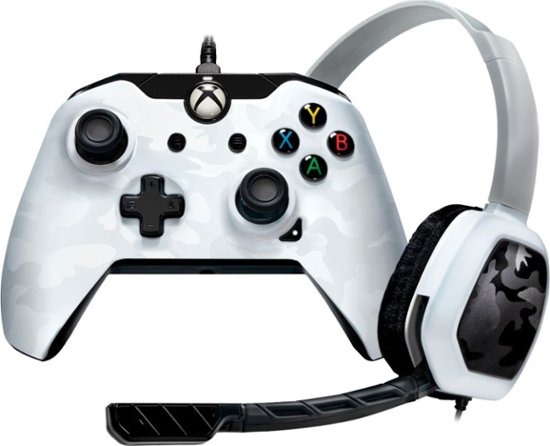
2. Use a headset and joystick for maximum gaming effect. A lot of games actually recommend using the Joystick for a better experience, Mario 2012 is an example. 

A joystick / headset combo.

3. Sit comfortably, if you can get a beanbag that would probably be awesome! (I don’t have one yet). 

Beanbag, the perfect gaming companion


4. Keep it fresh and exciting, I’ve reviewed a bunch of awesome games on this blog, and there are hundreds more that can be downloaded for free.

5. Have fun, don’t over think stuff, don’t force it either. Things are best when they occur naturally.

Final words

With these tweaks and tools, the gaming experience on Linux isn’t only possible, but actually rather enjoyable. There are plenty of titles to choose from and good times to spend with games.

Did you find your second wind before? What worked for you? Let me know in the comments section below.

Introduction to wine on Ubuntu Linux

Wine stands for (Wine Is Not Emulator), and it’s a bunch of Mono libraries used to run windows programs on Linux.
As a Linux user you will cross paths with wine and in this post I’ll be talking about whether is it a good or a bad addition to your system.

Why wine?

If you play games then you will come across wine sooner or later, as we all know that Linux is not a gaming system by default. The last few years saw a rapid growth in Linux games thanks to Steam, and software that eases game installation like Lutris. However it’s far from Linux being a default system for developers and gamers alike. And that where wine comes to play.
You need all the help you can get playing on Linux, if you can have your collection of games running with Wine, that’s a win (no pun intended).

A starting point

Any beginner taking the first steps in the world of Linux will have to use Wine to ease the transition from MS to Linux. (No! I don’t mean drink the pain away!!) In fact some distributions aimed at beginner users have it installed by default like Zorin.

Wine because wine exists

Many game developers won’t port games to Linux and instead direct users to “Wine” for games to run on Linux. As for older games that are already out there, good luck with those!  The only way to be able to enjoy them on your system is to have Wine installed.

Wine is better than other solutions

Using wine is much safer than having a dual boot setup, if you mess up the installation procedure then it’s good bye files! (Always have a backup and even make an image of your hard drive).

What programs and games Wine runs?

There are thousands of games and programs that run on Linux using Wine, and with every update that list grows more in size. The best way to know is to try of course and see how things work out.

How does it work?

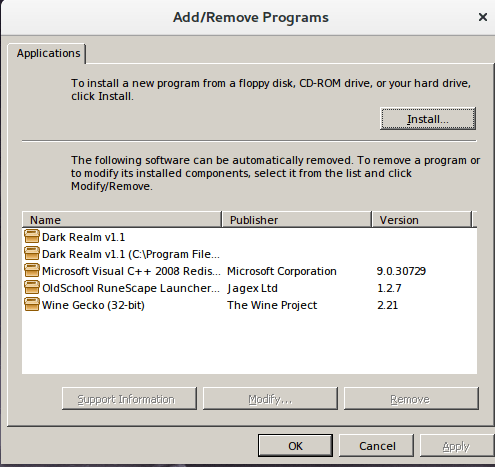
If you have portable programs, just double click them to work. If they require an installation then follow the steps as you would on a MS system. You can remove them later from “Uninstall Wine programs”.

Uninstall wine programs from here

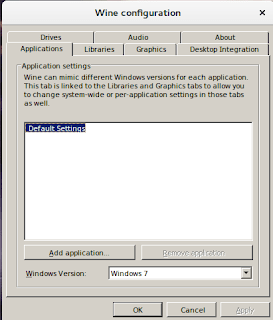
 And you can edit several settings from the applet configure wine, including what version of windows does it work like for compatibility.

If you already have it, Wine it!

Many free and open source games (I’ve reviewed several on this blog) run on Linux and Windows. So if you have the game for Windows and you have Wine installed, there is no need to download the game again, here wine helps you save some data!

Installation 

Please refer to the manual on the official website, there are steps that needs to be done in order to get the 32 bit and 64 bit programs to run without an issue on Ubuntu. I recommend using the development branch to get the latest version possible.

Final words

Wine is not a perfect solution, it has its flaws like any software, but it came a long way in running your games and software on Linux. Having it run with Lutris really enhances your gaming experience and widens your game options by a whole lot!

Just remember to use with moderation, native is always better.

Do you use Wine on your Linux machine? How is your experience?  Leave a comment below and let me know what do you think?

I wrote an Arabic post a few years ago that roughly mentions wine, take a look at it from here.

Lutris, a game management software for Ubuntu

I’ve been into gaming for as long as I could remember, and I’ve devoted a lot of posts on this blog to talk about games that I like. My taste varies between retro games and free / open source games. Sadly I can’t get much gaming done and my style is close to short random bursts followed by ever-long hiatuses. Well today I present a software that I think will have a pivotal role in my future gaming habits. Lutris..

But before that, lets take a look at the origin of the issue

I’ve slowly fallen out of favor with games, from being someone who played anywhere from 4 – 6 hours a day to someone who plays once every blue moon. I know that growing up and finding a steady job changes a person, however I don’t want to drop video games out of my life altogether, I hate to think of how my life would’ve been without video games!

Failed attempts

I’ve tried different things to rekindle my passion for gaming, buying a gaming keyboard was the latest attempt but so far to no avail. I still forget to play games even when I spend a long time on the computer. I blame social media and Reddit. They are too attractive!

Trying to allocate a time for gaming and putting that on a To-Do list feels so forced and takes the joy out of something that used to be spontaneous and joyful.

I think my problem is that I don’t know exactly what games I have, more specifically I forget my game progress and anything else done. In my previous attempts I tried making a folder and placing game shortcuts in it, or a dock like plank and putting game shortcuts on it, but that never worked.

Linux not for gamers

I love Linux, however it’s not a system for gamers, the games are little and not so good, beggars can’t be wishers I suppose.

I’ve searched repeatedly for a software that could be a game hub, one place for all my games, and until yesterday I thought something like that cannot exist, until I met Lutris!

Lutris, the game collection software

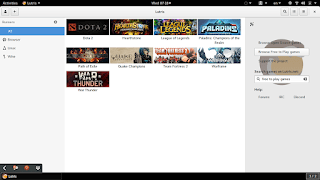
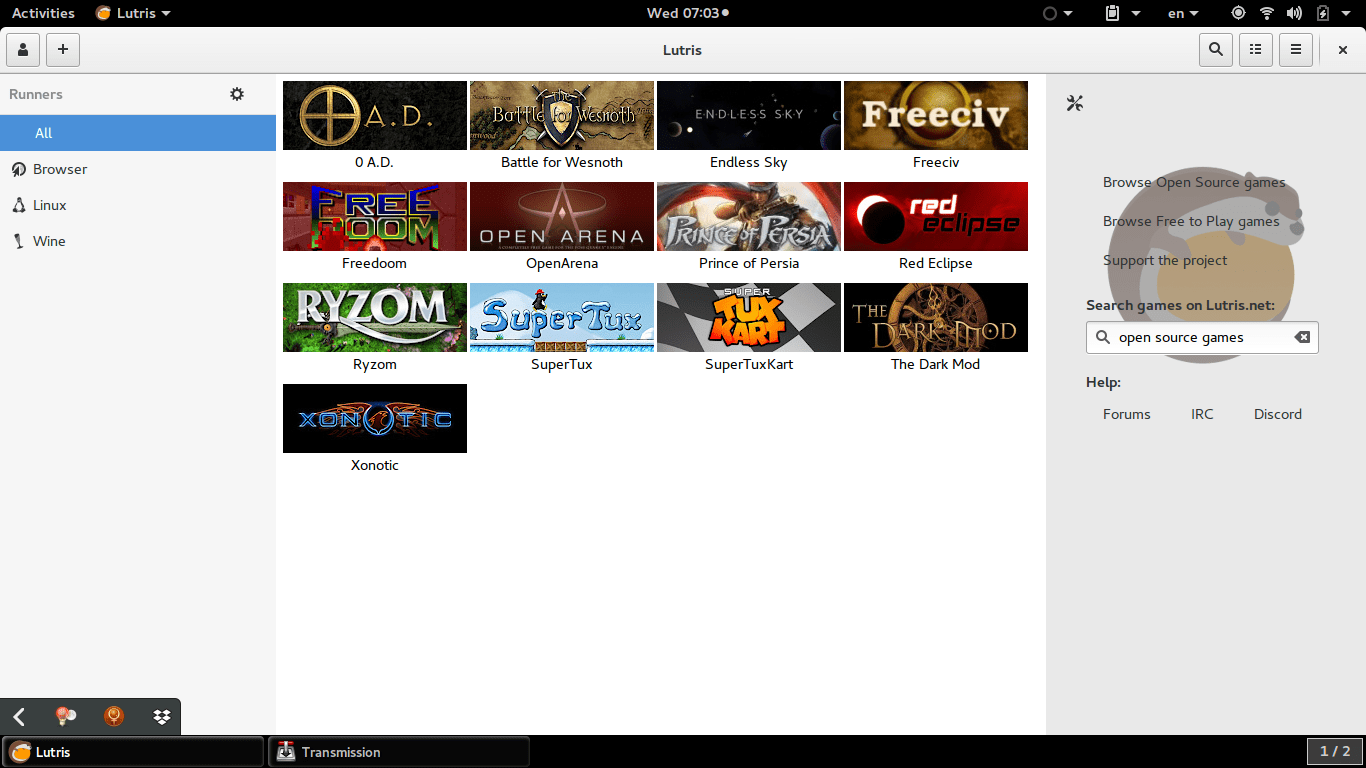
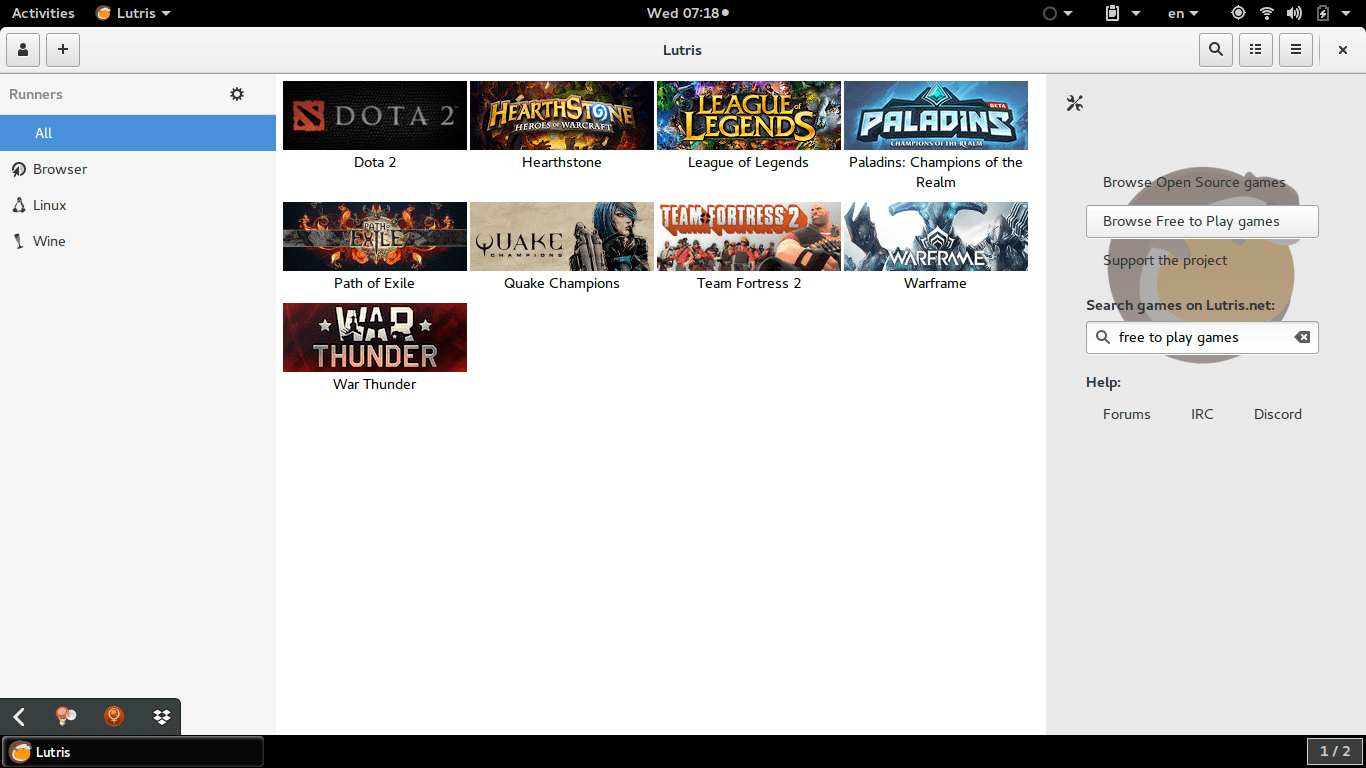
Lutris is a free and open source game library that puts all your games in one place inside one interface, each game would have information and a picture that help you easily choose a game from the list.
Lutris is very easy to use, and is incredibly useful. I managed to collect the games installed on the system, with the archives downloaded in tar.gz (making icons for these is a hassle in Linux), and even games from my old windows collection using wine. To me this is a dream come true.
A sense of order in a rather chaotic collection, and for the first time Linux feels like a system that could do gaming. 


Pros of Lutris

  • I really like the statistics in Lutris, tells you when did you play a game last, and how much time did you spend on that game.


  • I also appreciate the extensive settings it has, such as forcing the keyboard language to be English during playing, and setting the screen resolution back to original after closing a game. (Especially useful with Wine games).


  • Can easily import all of your installed games with one click. Be careful as importing games after that using this method will result in duplicates.


  • The settings are powerful and wonderful, give more control over the gaming experience as whole.


Cons of Lutris

  • Lutris isn’t without faults, it hangs a lot (during game downloads mostly) and still in early releases judging by the performance.


  •  I also don’t like the icon very much, however if you design a tool this awesome, you get to choose whatever you want as a mascot.


  • I also wasn’t able to play any game I downloaded from the online collection, all had mistakes and I had to remove them. I don’t know what’s the problem and it’s not really an issue to me. I just want a place to gather my games.
  • having to add pictures manually to games rather than the default Lutris icon, which is super easy to use by the way, but can be a tedious process if you own a lot of games.


  • Importing the library over and over will result in duplicates, so you have to be careful when importing and deleting games, especially when you check the choice of removing the game from the system all together! (This was later fixed in version 0.5.2).


How to install Lutris on Ubuntu

Enter these commands one by one into a terminal, and after some time it will be installed on your system, download size around 118 MB


sudo add-apt-repository ppa:lutris-team/lutris

sudo apt-get update

sudo apt-get install lutris


D9VK

D9kx frame work aiming to improve the Linux gaming experience using Lutris. Can be downloaded from GitHub and installed via this tutorial on YouTube.

Final words

I think Lutris is the best game library I’ve seen for Linux, it’s sleek and feature packed. I think I’ll do more gaming since installing Lutris, only time could tell.

Newer posts »